
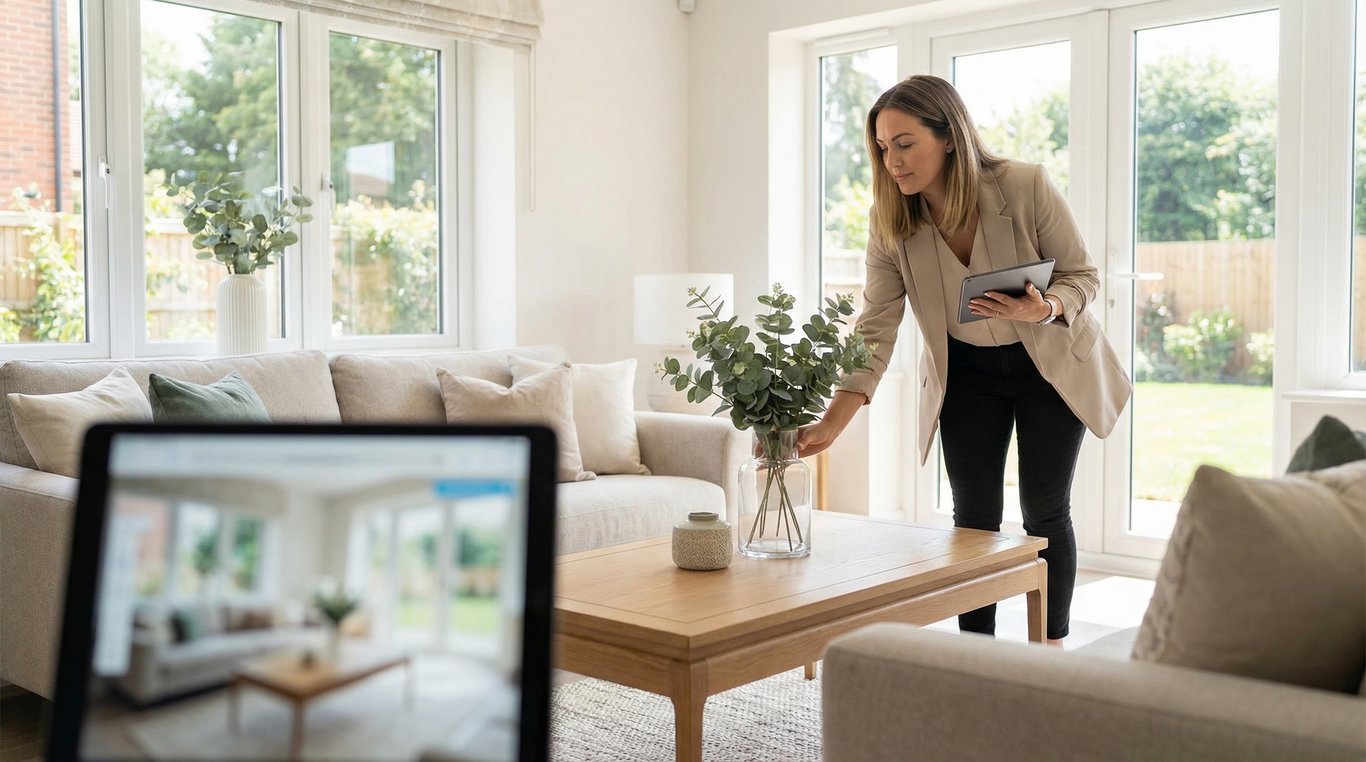

Hiring home stagers is one of the fastest ways to improve a listing’s first impression—without taking on a full renovation. For agents, a good home stager can reduce “why is it sitting?” feedback by making rooms read larger, brighter, and more buyer-neutral.
This guide is role-focused (commercial intent): what a home stager does, how pricing typically works, when it’s worth it, and when alternatives like virtual staging make more sense.
If you’re looking for the broader concept of home staging, this article goes deeper on the provider and decision process.

What is a home stager? (quick definition for real estate listings)
A home stager is a real-estate-focused professional who prepares a property to appeal to the widest pool of buyers—primarily through layout, furniture styling, and photo-ready presentation.
In listing terms: a home stager is there to help the home show better online and in person, support your pricing strategy, and reduce objections during showings.
What a home stager is responsible for
Common responsibilities include:
- Evaluating what buyers will notice first (flow, scale, light, function)
- Creating a plan to improve perceived space and livability
- Recommending edits to furniture, décor, and room usage (e.g., “this should read as a nursery/home office”)
- Coordinating staging installation for vacant homes (furniture + accessories)
- Styling for listing photos (camera angles, vignette placement, clutter control)
What a home stager is not (cleaning, repairs, remodeling)
Most home stagers don’t replace licensed trades or ongoing home maintenance. They typically are not responsible for:
- Deep cleaning, carpet cleaning, window washing
- Repairs (drywall, electrical, plumbing, roof, HVAC)
- Remodeling or construction work
- Full interior design services meant for long-term living
They may recommend these items because they affect photos and buyer perception, but you’ll usually hire separate vendors to execute them.
What home stagers do: services and deliverables
Home stagers vary by market and business model, but the core deliverable is consistent: a clear plan to make the property look its best for the listing period.
Consultation & staging plan
A consult is often the entry point, even if you later choose full service. A strong staging plan typically includes:
- A room-by-room priority list (what moves the needle most)
- Furniture styling guidance (what to remove, what to re-position)
- Color and “visual noise” edits (overly personal items, bold accents)
- Photo prep notes timed to your listing schedule
Tip for agents: ask for the plan in writing so you can align the seller, cleaner, handyman, and photographer.
Decluttering, layout, and buyer-friendly styling
This is where staging makes a measurable difference quickly. The stager focuses on:
- Clearing surfaces to make rooms feel larger
- Improving traffic flow (e.g., pulling furniture off walls or creating more walkway space)
- Defining room purpose (especially awkward nooks and multi-use spaces)
- Creating “buyer-neutral” moments (simple art, cohesive textiles, restrained accessories)
Furniture rental and installation (occupied vs vacant homes)
- Vacant staging: the stager typically brings in rental furniture, rugs, art, lamps, and accessories; then installs everything before photos.
- Occupied staging: the stager often works with what’s there, adding select pieces (or swapping items) to improve scale and cohesion.
A home stager will also consider practical constraints: elevator reservations, tight staircases, fragile floors, and storage needs for removed items.
Accessory styling, art, linens, and lighting
Small items matter on camera. A stager’s furniture styling work often includes:
- Bedding and layered linens to make bedrooms feel “finished”
- Coordinated towels/curtains for clean bathroom photos
- Art placement to balance walls and improve scale
- Lighting adjustments (bulb temperature consistency, lamp placement, shades)
Staging for photos vs staging for open houses
A common misconception: staging is only for photography. In practice, great staging considers both:
- Photos: cleaner sightlines, fewer items, wider perceived space, camera-friendly angles
- Showings/open houses: durability, safe walk paths, and making sure rooms “live” well in person
If you’re tight on time, prioritize photo staging first—because online presentation drives showings.
How much do home stagers cost? (typical pricing models)
Home stager pricing varies by market, inventory, property size, and timeline. Rather than relying on generic averages, use these common pricing models to compare bids apples-to-apples.
Typical home stager pricing models (at a glance):
- Consultation-only: flat fee for a walkthrough + written recommendations
- Per-room staging: pricing based on key rooms (living, primary, dining, etc.)
- Vacant staging package + monthly rental: upfront install fee plus ongoing furniture rental for the listing period
- Occupied “refresh” staging: editing + styling with existing items; may include add-on rentals
Consultation-only pricing
Best for: sellers who will do the work themselves (or with an agent’s help).
What you’re paying for:
- Expertise, prioritization, and a plan tied to buyer expectations
- Faster decision-making (what matters vs what doesn’t)
Ask whether the consult includes a written checklist, photo examples, and follow-up Q&A.
Per-room staging pricing
Best for: occupied homes that need help in the “money rooms” (often living room, primary bedroom, dining, entry).
Common structure:
- A set price per selected room
- Optional add-ons (art, rugs, lamps, accessory kits)
Vacant staging packages + monthly furniture rental
Best for: vacant listings where empty rooms read cold, small, or undefined.
What to clarify in the quote:
- Which rooms are included
- Install date, pickup date, and what triggers extra months
- Replacement/damage terms for furniture and accessories
Occupied staging / “refresh” pricing
Best for: lived-in homes that are generally furnished but need cohesion, editing, and photo readiness.
Occupied refresh often focuses on:
- Decluttering and depersonalizing
- Reworking layout for flow and scale
- Select rentals to fill gaps (e.g., rugs, stools, art)
Variables that change cost (market, home size, timeline)
When comparing proposals, these variables usually drive the spread:
- Market expectations (luxury vs entry-level norms)
- Total square footage and number of rooms staged
- Access constraints (floors, parking, long carries)
- Speed (rush installs around listing deadlines)
- Rental duration and whether price includes extensions
When hiring a home stager makes sense (and when it doesn’t)
The decision isn’t “staging vs no staging.” It’s: what presentation level matches your price point, buyer pool, and days-on-market strategy?
Luxury listings vs entry-level listings
- Luxury: buyers expect polish and proportion. Staging can be the difference between “custom” and “dated,” especially in photos.
- Entry-level: staging can still help, but targeted edits (declutter, paint touch-ups, lighting) may deliver the best ROI.
If the seller is DIY-minded, point them to this stage your house checklist to cover the essentials before spending on rentals.
Days-on-market situations
If a listing is sitting, staging can work as a “re-launch lever,” especially when paired with:
- Fresh photography
- Stronger lead image selection
- A clearer room-purpose story (e.g., turning a “junk room” into an office)
Poorly furnished or vacant properties
- Poorly furnished: mismatched scale, worn upholstery, or clutter can drag the perceived value down.
- Vacant: buyers struggle to judge room size and function; photos can feel flat.
This is where furniture styling and defined vignettes are most impactful.
Fast turnarounds and budget constraints
Skip full staging (or keep it minimal) when:
- The seller can’t support the prep timeline (declutter/clean/paint)
- The budget is better spent on repairs that show in disclosures or inspection
- You can achieve the goal with a smaller scope: consult + photo-day styling
Home stager vs interior designer vs decorator (differences for sellers and agents)
These roles overlap, but the intent is different. Use the summary below to choose the right help for a listing.
| Role | Primary goal | Typical scope | Best for |
|---|---|---|---|
| Home stager | Sell faster / show better | Layout edits, buyer-neutral styling, staging install (vacant) | Listings, DOM problems, photo improvement |
| Interior designer | Functional + aesthetic long-term design | Space planning, finishes, built-ins, remodel coordination | Renovations, customizing a home for living |
| Decorator | Improve look and feel | Color, furnishings, décor selection | Refreshing a lived-in home’s style |
For a deeper angle on the decorator side (especially for listing presentation), see: interior decorator for real estate agents.
Goals: sell faster vs personalize a home
- Home stagers optimize for broad buyer appeal and first impressions.
- Designers/decorators often optimize for the owner’s taste and long-term comfort.
That’s why a staging plan may recommend removing personal collections or bold furniture even if it’s “good design.”
Project scope and timelines
Staging is usually fast and deadline-driven (photo date, listing launch, open house). Design projects can stretch weeks to months.
How to decide who you need
Ask one question: Is the work mainly about presentation for the listing period, or about changing the home permanently?
- Presentation = home stager
- Permanent change = designer (and likely contractors)
- Cosmetic refresh for living (not selling) = decorator
Virtual staging vs in-person home staging: pros, cons, and best-fit scenarios
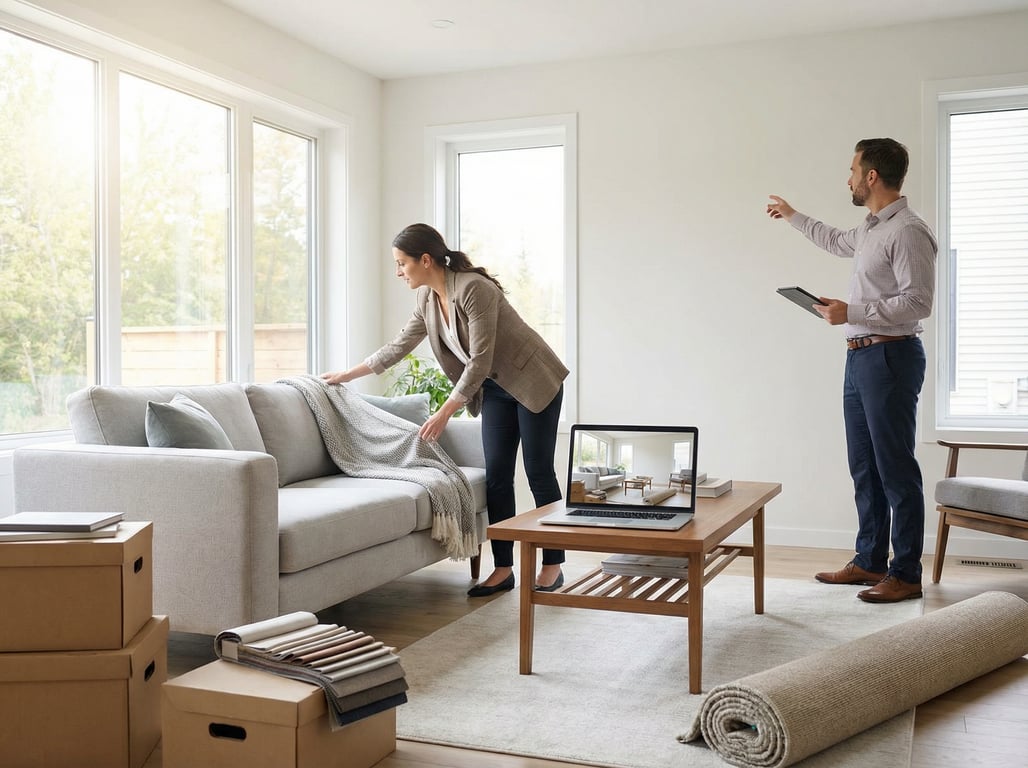
Virtual staging can complement or replace some physical staging—especially when speed, access, or budget make furniture rental hard to justify.
| Option | Pros | Cons | Best fit |
|---|---|---|---|
| In-person staging | Real furniture for showings; strong in-person experience | Higher cost; scheduling + logistics | Vacant homes with heavy showing traffic; luxury |
| Virtual staging | Fast; cost-effective; flexible styles | Doesn’t help in-person feel; photo policy/disclosure matters | Vacant homes; tight timelines; testing layouts |
Vacant listings: speed and cost considerations
Vacant homes are the clearest fit for virtual solutions because the photos do the heavy lifting.
If you’re exploring this route, review examples of virtually staged photos and the process behind virtual home staging.
Occupied listings: minimizing disruption
Occupied homes can be tricky for virtual staging because the real furniture still exists during showings. Often, the best approach is:
- Light physical prep (declutter, simplify, improve lighting)
- Photo-day styling (even if minimal)
- Virtual staging only when a room is genuinely hard to photograph well (e.g., empty bonus room)
Disclosure and MLS/photo-use considerations (high level)
Virtual staging can be effective, but keep it compliant:
- Follow your MLS and brokerage rules for disclosures/labels
- Avoid edits that misrepresent fixed features (windows, walls, ceiling height)
- Keep a consistent set of “as-is” photos when required
When in doubt, treat virtual staging as furnishing and décor visualization, not remodeling.
Hybrid approach: light physical prep + virtual visuals
A common winning combo:
- Physical prep: clean, declutter, neutralize, correct lighting temperature
- Professional photos: capture bright, accurate base images
- Virtual staging: add furniture styling to key rooms for online marketing
This keeps disruption low while maximizing online appeal.
How to choose a home stager: checklist for agents and homeowners
Use this checklist to screen home stagers quickly and reduce surprises after you sign.
Portfolio review: before/after and comparable price points
Ask to see:
- Before/after sets in homes similar to your listing (size, era, price band)
- Examples that include challenging spaces (small living rooms, long/narrow rooms)
- Photos that look like your market (not just editorial shoots)
Style fit: neutral, modern, organic modern, etc.
Staging should match your likely buyer—not the stager’s personal taste. Confirm they can deliver the look you want (e.g., neutral-modern, transitional, organic modern) without overpowering the home.
Turnaround time for listing deadlines
For agents, timeline reliability is part of the product. Confirm:
- Earliest consult date
- Install window (for vacant staging)
- How they handle rush photo schedules
Contract basics: inventory, damage terms, rental duration
Before approving, read for:
- Inventory responsibility (what’s listed, what’s insured, what’s not)
- Damage and wear terms (pets, kids, movers, showings)
- Rental duration and extension pricing
- Pickup scheduling and what happens if closing is delayed
Photo coordination and shot list
The best results come when the stager and photographer align. Ask whether they:
- Attend photo day or provide a shot list
- Adjust styling for camera angles (not just walk-through aesthetics)
- Coordinate with the agent on “hero rooms” and lead image options
Key takeaways
- Keep the piece role- and decision-focused (commercial intent): definitions, cost structures, selection criteria, and when to use alternatives.
- Avoid duplicating existing Property Glow articles about “stage your house” and “virtual home staging” by focusing on the provider/service (home stagers) and decision process.
- Use real-estate language (agents, listings, DOM, open house, vacant vs occupied) to differentiate from generic interior design content.
FAQ
What does a home stager do for a real estate listing?
A home stager improves a listing’s presentation by optimizing layout, reducing visual clutter, and using buyer-friendly furniture styling so the home photographs and shows better.
How much does a home stager cost?
Costs usually follow a few models: consultation-only fees, per-room pricing, vacant staging packages plus monthly furniture rental, or occupied “refresh” staging. Price depends on market, home size, scope, and timeline.
Is home staging worth it for an occupied home?
Often yes—especially when the home is cluttered, furniture scale is off, or photos aren’t translating. Occupied staging is typically focused on editing, layout tweaks, and light rentals rather than full furniture replacement.
What is the difference between a home stager and an interior designer?
A home stager optimizes a property to sell (broad appeal, short timeline). An interior designer plans long-term function and aesthetics for living, often involving renovations and permanent selections.
Can you use virtual staging instead of hiring a home stager?
Yes, particularly for vacant listings where photos drive interest. For occupied homes, virtual staging can help online, but you may still need physical prep so in-person showings match expectations.